

An important location for talented European composers of the 17th century was Rome’s Collegio Germanico, the Vatican’s training center for German-speaking priests. Musicians connected to the center include Tomás Luis de Victoria, Giovanni Pierluigi da Palestrina, Giacomo Carissimi, Marc-Antoine Charpentier and Giovanni Felice Sances. This confluence of talent led to a golden age of sacred music in Rome and the emergence of creative performance practices that have remained relatively unknown. For example, the Collegio Germanico and other churches in Rome were beginning to add instrument doublings to their performances in the late 16th century and throughout the 17th century – so much that people started referring to this practice as the “uso di Roma,” or the “use in Rome.”
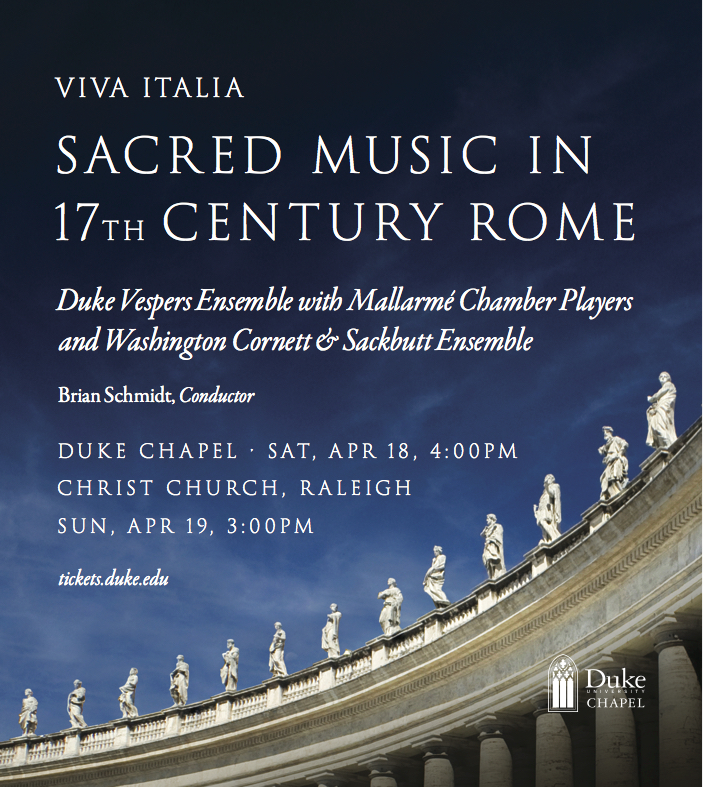
The Viva Italia concert represents much of what one would have heard in Mass or Vespers worship services at the Collegio Germanico and elsewhere in Rome in the 17th century. Selections include:
- Ave regina caelorum by Tomás Luis de Victoria
- Regina Caeli by Tomás Luis de Victoria
- Salve Regina by Tomás Luis de Victoria
- Alma redemptoris mater by Giovanni Pierluigi da Palestrina
- Dixit Dominus by Marc-Antoine Charpentier
- O Dulcissima Mariae Domine by Giacomo Carissimi
- Ave maris stella by Giovanni Felice Sances
- Vulnerasti cor meum by Giovanni Felice Sances
- Missa Sancta Mariae Magdalenae by Giovanni Felice Sances (2nd performance ever in North America)
Leave a Reply
You must be logged in to post a comment.