

Photo by Dayne Topkin on Unsplash
“It is much more difficult to reorganize the brain than it is to organize it
in the first place. Organization inhibits reorganization”.
The week of February 17 – 21 was winter break for many schools here in the Central New York area. During the break, I attended and presented a session for the NJMEA 2020 State Music Conference in Atlantic City. I once again return home from a music conference with new ideas, new understandings, and a renewed appreciation for my colleagues and the subject I teach.
A New Idea
The quote above is from a presentation given by John Feierabend titled “Endangered Musical Minds.” This outstanding session that got me thinking about student learning and musical understanding. The line “Organization inhibits reorganization” gave me an “Aha” moment –
That is what I am asking of my students!
I realized that this is the key to Agile-Centered Music Education. Through Minds-on-Learning and using Reflection-in-Action in my classroom, I am continually asking my students to reorganize and adapt their learning by:
1. Building a repertoire of experiences, actions, understanding, and images
2. Seeing unfamiliar situations as both similar and different from their past challenges and problems.
3. Internalizing their repertoire of experiences (skills and processes)
4. Constructing their own experiences to where they individually gain the ability and insights to create interventions and understand new concepts.
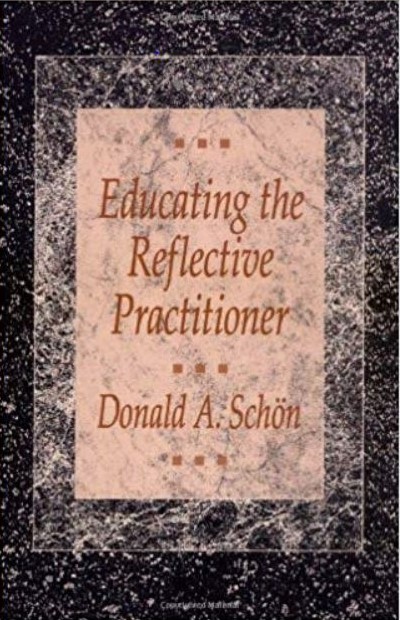
Donald Schon (1987) calls this Reflective Practicum in chapter 7, Using Reflective Practicum to Develop Professional Skills.
A New Understanding
As I write, it occurred to me that this is also how I learn and experience music conferences and professional development in-services. Through the years, I have:
1. Built a repertoire of experiences, actions, understanding, and images
2. Organize this learning into similar/different, useful/not useful, practical/ineffective teaching methods
3. Internalize the information and create new teaching strategies and methods
4. Reorganize and adapt this new understanding for instruction
My students know, and now expect, that after I attend a music festival or conference, I always bring back new ideas, activities, or warm-ups to the class and reorganize and adapt our learning.
An Appreciation
I also left the conference with a renewed appreciation for my colleagues and new friends. I am thankful to those who attended my session and participated and engaged in the activities, and to the following clinicians for sharing their knowledge and experience with those who attended their session.
Rachel Grimsby, A Universal Approach to Music Education (her passion for teaching and learning)
John Feierabend, Endangered Musical Minds (his outstanding publications and research)
Shawna Longo, Mindfulness in Music: It’s not just for the students! (her concern for others)
Richard T. Tinsley II, Oakcrest High School Select Choir (his dedication to his students – and thank you for the great concert and repertoire information: The Music of Stillness, Elaine Hagenberg – nice tune!)
Conclusion: Becoming a Student of Reorganization and Adaptation
In one session, a colleague with over 40 years of experience shared her repertoire suggestions for middle school SAB ensembles. After the session, I introduced myself and asked: “With over 40 years of teaching experience, what motivates you to participate still and attend Music Conferences?” She responded with a smile, “I always find a new song or two, or an idea that I incorporate into my teaching.” Even though she has many years of experience, she is still a student of reorganization and adaptation.
“It is much more difficult to reorganize the brain than it is to organize it in the first place. Organization inhibits reorganization”.
Google Meet
The next online meeting will be held on Sunday, March 1, at 5:00 PM Eastern Standard Time, and will last for about a half an hour. If you are interested, you can email me at or use the link below:
https://meet.google.com/dag-fiuj-yfv?hs=122
References:
Reimer, Bennet. “Music Education in the Twenty-First Century.” Music Educators Journal 84, no. 3 (November 1997): 33-38.
Schön, Donald A. Educating the Reflective Practitioner. San Francisco: Jossey-Bass A Wiley Imprint, 2016.
Smith, M. K. (2001, 2011). ‘Donald Schön: learning, reflection and change: the encyclopedia of informal education. [www.infed.org/thinkers/et-schon.htm. Retrieved: 2/22/2020].
Leave a Reply
You must be logged in to post a comment.